ENTERPRISE SAAS • B2B • AI
Architecting a unified, enterprise-grade contact center workspace for over 1M+ daily agents, where instant system clarity under pressure is critical to business continuity.
NICE CXone Agent Workspace
ROLE
Senior UX Designer
TEAM
1 Design Manager, 2 UXR, 1 Jr. Designer, 2 PMs
PLATFORM
B2B Enterprise SaaS, Agent Desktop
SCOPE
Product design, UX research, design systems, AI tooling
OVERVIEW
NICE is the #1 global SaaS cloud contact center platform, relied upon by 85 of the Fortune 100.
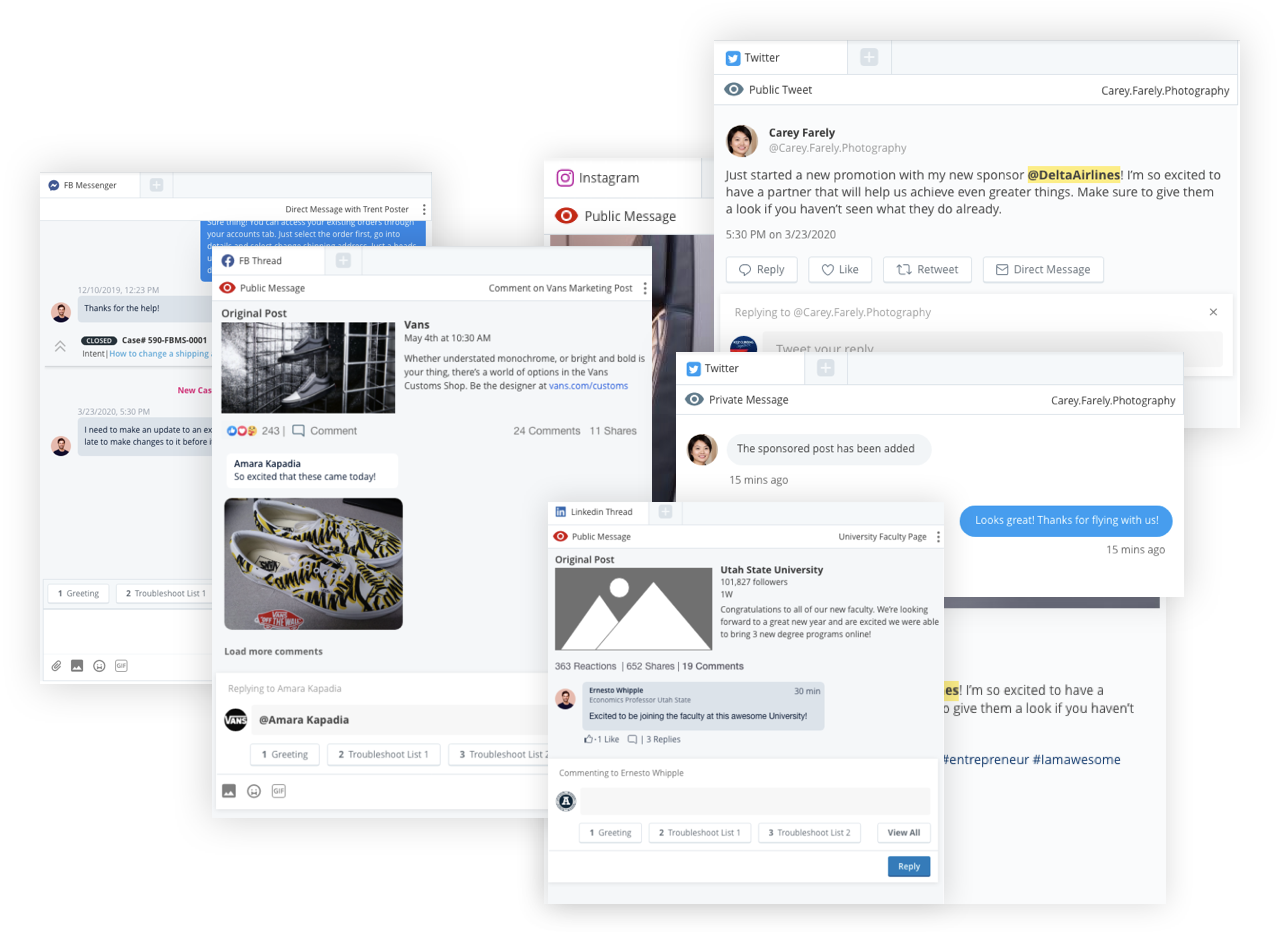
Following the acquisition of a native social media company, the team was tasked with merging entirely new asynchronous workflows into the legacy workspace.
The primary challenge was system coherence at scale: agents needed to instantly understand the state of multiple communication channels (voice, chat, email, SMS, and social) to maintain trust during high-pressure sessions where confusion has real, immediate customer consequences.





+ 80 of the Fortune 100
CONSTRAINTS & APPROACH
The process required navigating complex legacy architecture and fundamentally different call/interaction resolution expectations between phone calls and async social threads.
PROCESS
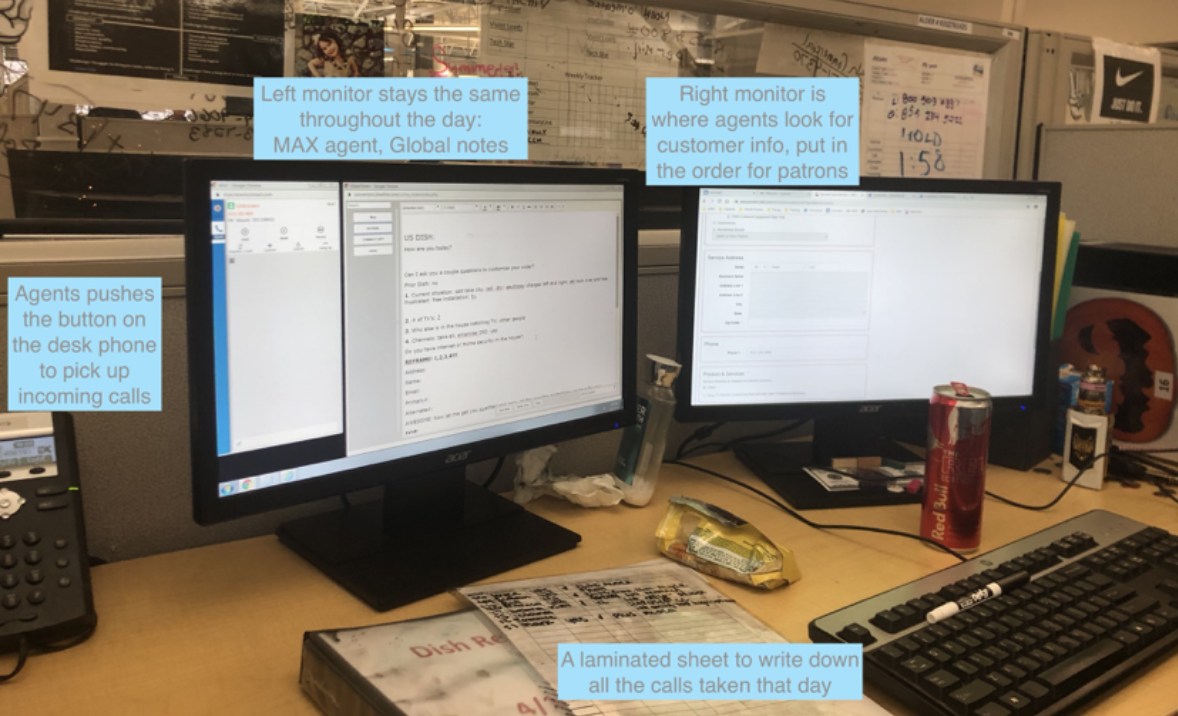
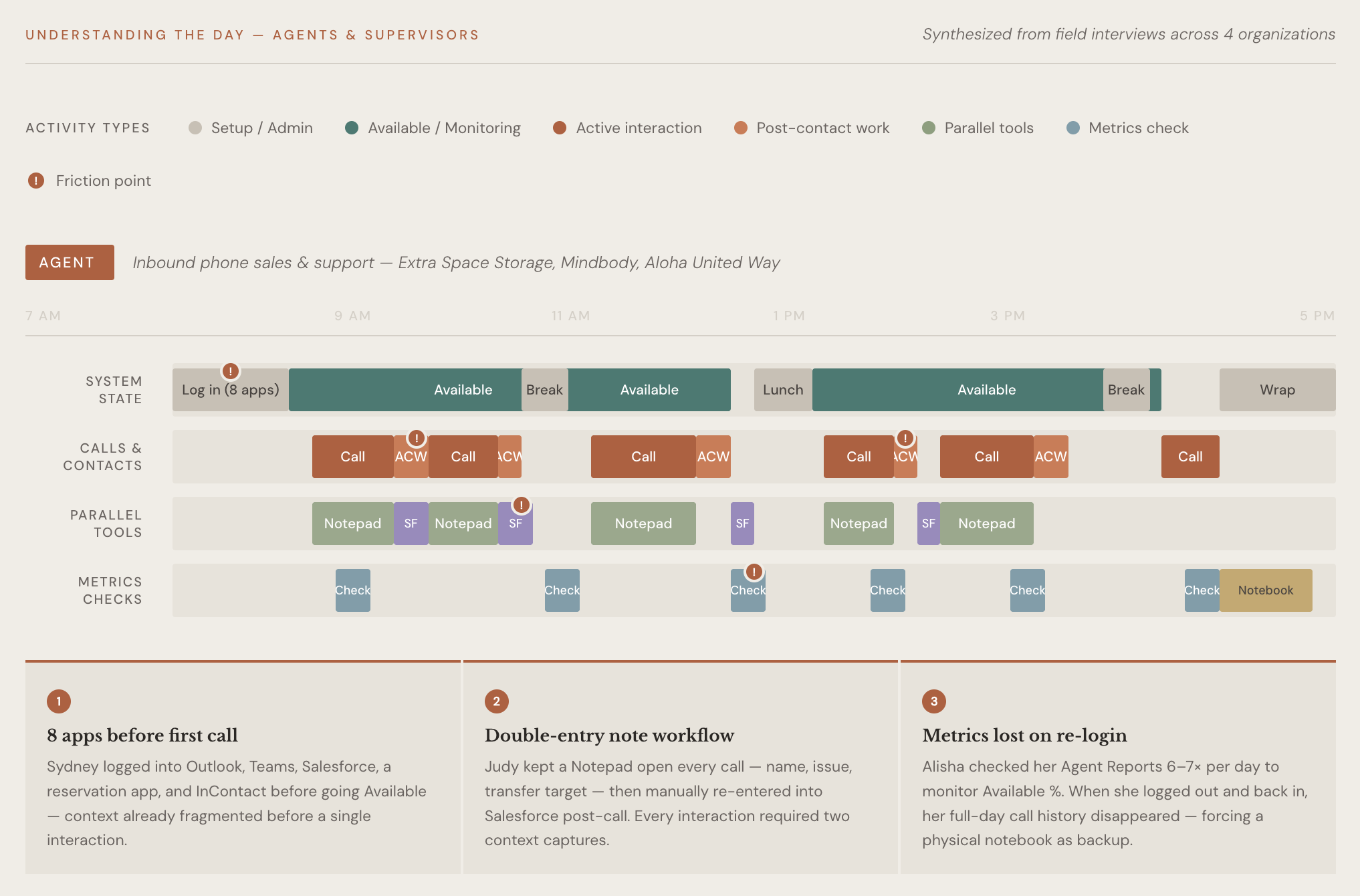
Conducted deep discovery, mapping out the full day of both agents and supervisors to understand every phase, handoff, and friction point across organizations like Mindbody and Extra Space Storage.
Led remote and on-site user interviews and usability testing, alongside competitive analysis, to integrate the acquired product's workflows smoothly.
Established a "North Star" design document referenced in every sprint to maintain focus on the hybrid vision.
Integrated new omnichannel iconography and components into the CXone Design System while strictly adhering to WCAG accessibility standards.
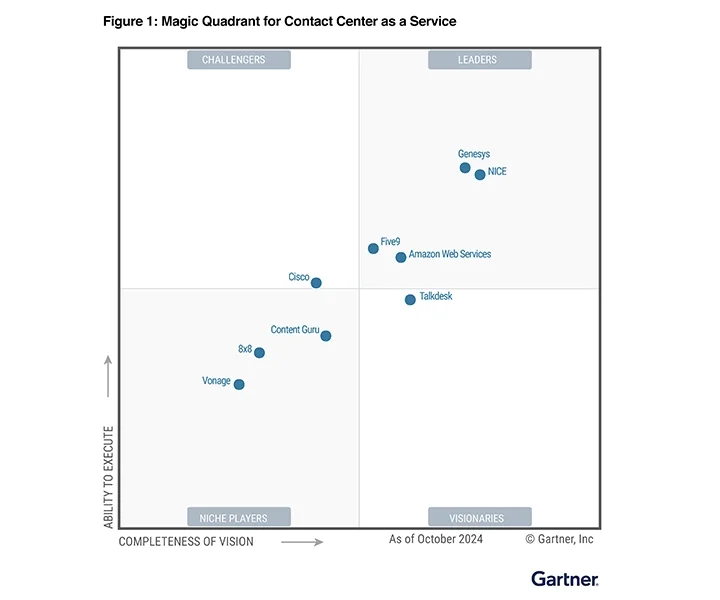
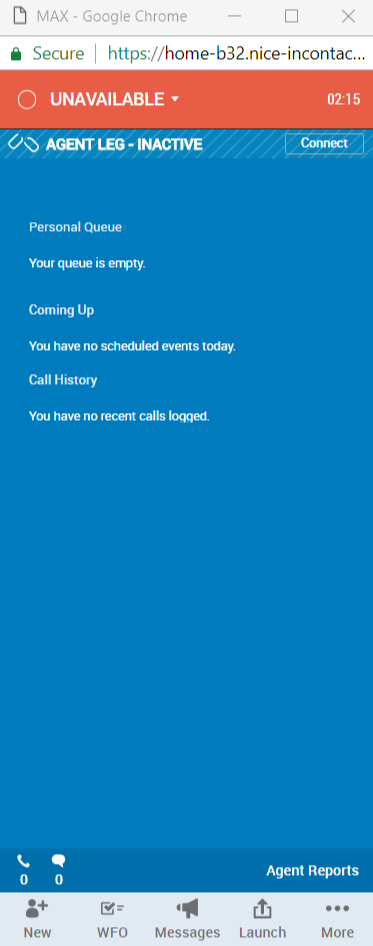
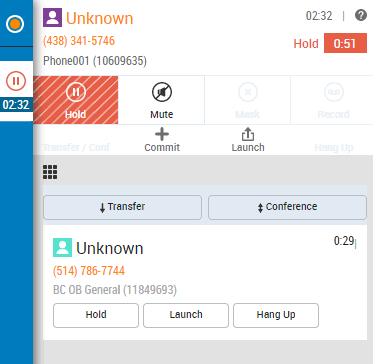
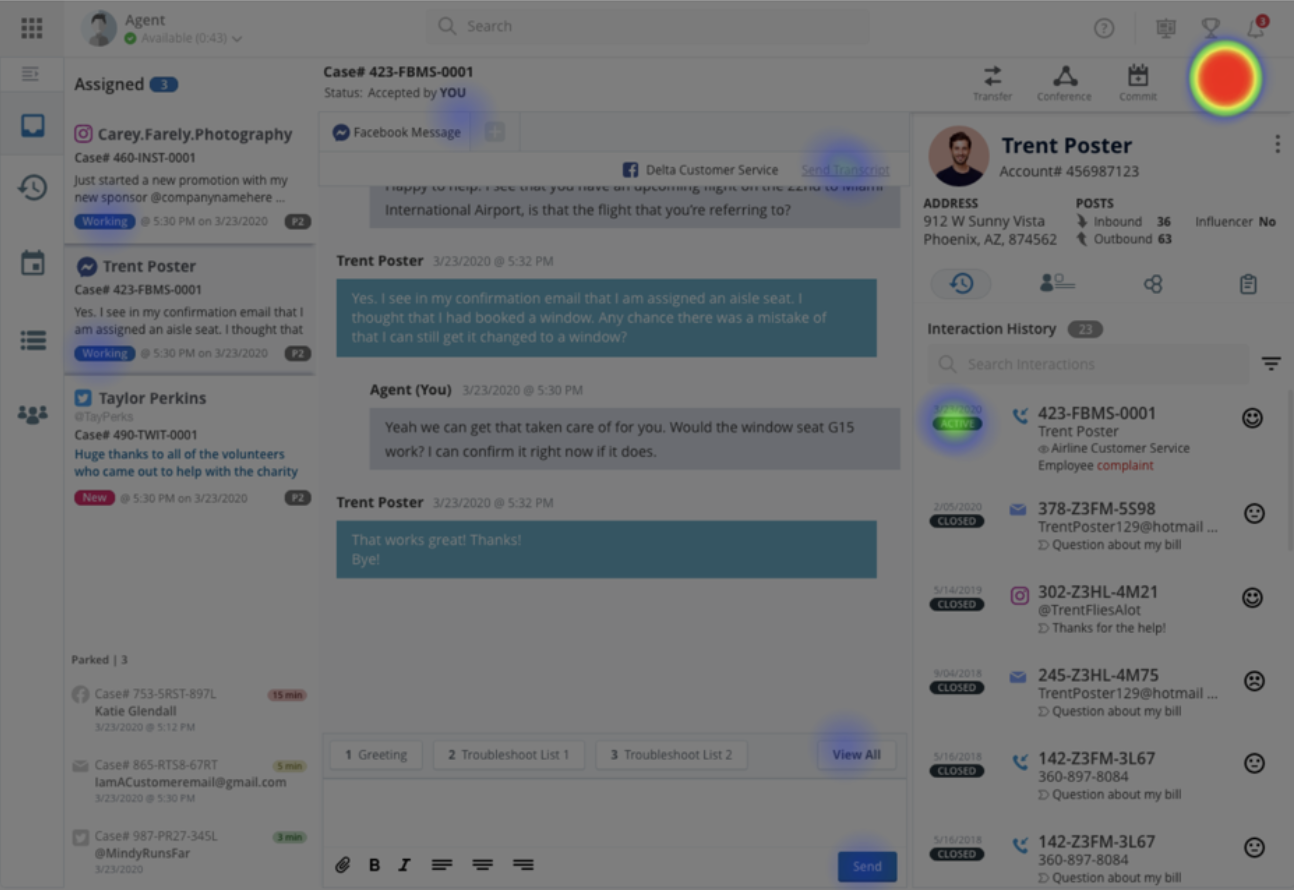
STARTING POINT: What we started off working with, outdated classic early 2010s enterprise software interface.
KEY INSIGHTS
!
Workarounds exposed system gaps
Agents were manually solving for missing context with self-prepared notebooks, post its, etc.
SOLUTION: Notes and unified interaction history are non-negotiable architectural requirements, not feature enhancements.
!
Data density required dynamic scaling
The exact same data visualization that motivated one agent completely overwhelmed another.
SOLUTION: Flexible layout configurations.
!
Friction wasn't resistance
Phone-native agents were not resistant to adopting new digital channels, they lacked a clear intuitive on-ramp to manage asynchronous flows safely.
SOLUTION: IA organized interactions by cases, instead of by channel.
THE PRODUCT
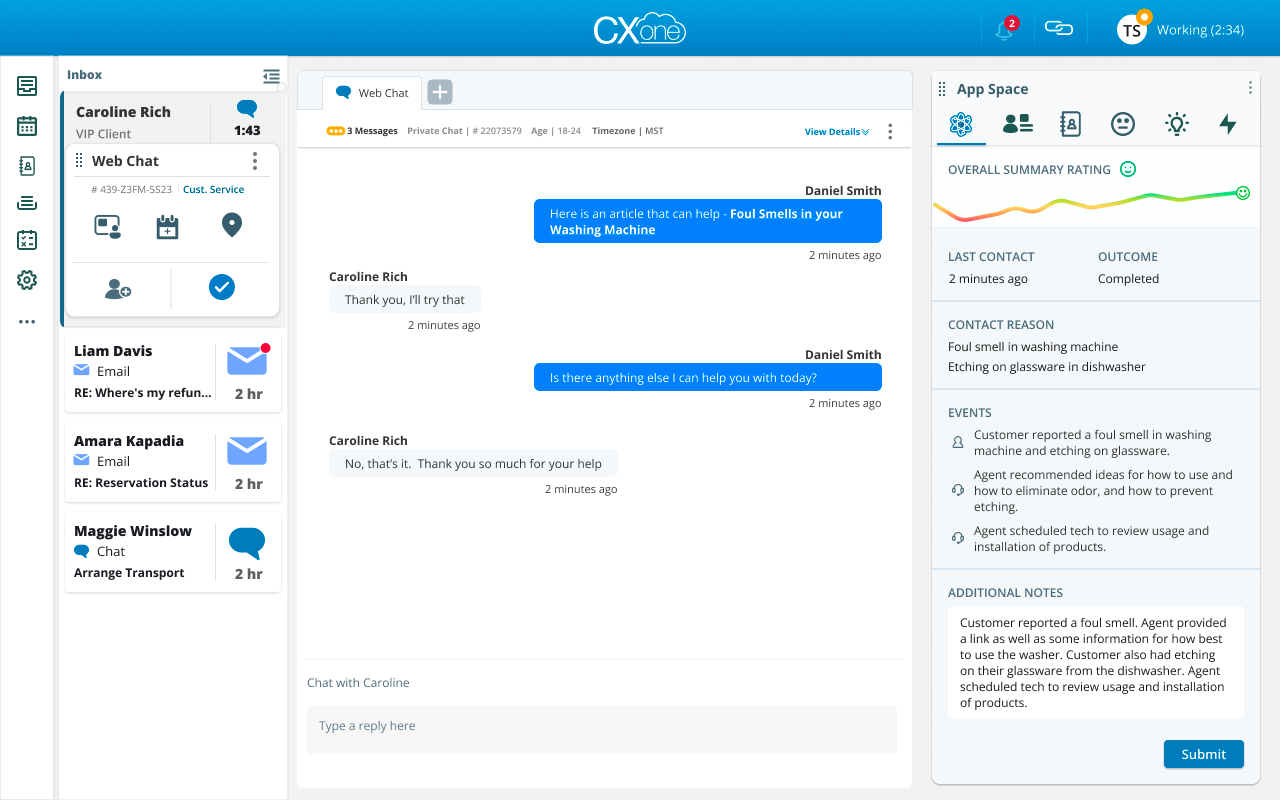
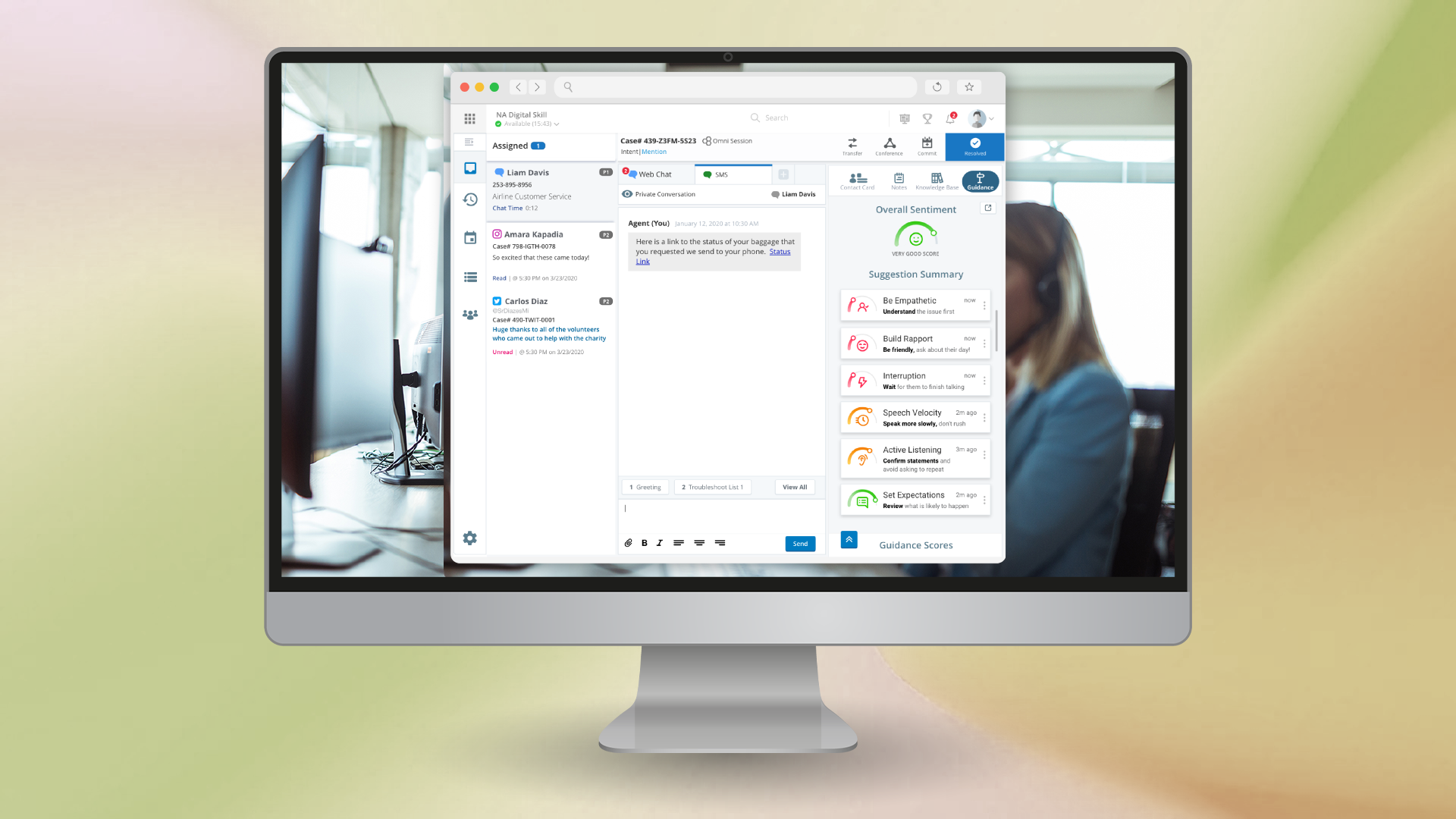
Agent Desktop: the unified workspace
Now the NICE CXone Agent Desktop is a single application supporting a wide range of agent workflows across 30+ channels. This interaction space was a first of its kind: agents could add additional communication channels to an ongoing interaction without opening a new case.
The app space is fully configurable with agent shift schedule, interaction history, directory, full assignment queue, app space, and real-time AI coaching, with each tool openable in its own window.
It is live, shipped, and you can check out the interactive product demo here.
Impact & Business Outcomes
The deployment across NICE's enterprise client base drove massive operational efficiency and financial efficiency:
NINE, Australian television network
55%
Reduction in Agent Attrition
18% increase in revenue
69% reduction in call transfers
22% increase in NPS*
*Net Promoter Score
Young Energy, Texas electric company
15%
Reduction in AHT*
10% increase in sales
15% increase in QA scores
10% reduction in ASA*
*Average Handle Time, Average Speed of Answer
Radisson Hotel Group
20%
Improved Agent Utilization
5% reduction operating costs
15–20% increase in QA scores
5-7% improved customer satisfaction
REFLECTIONS
Integrating a modern acquisition into a rigid legacy enterprise system fundamentally shifted how I approach product architecture.
I learned that in high-stakes and high-volume environments, mitigating operational risk and prioritizing system coherence must be treated as core design constraints, not just technical hurdles. We’re accustomed to hearing “it’s all important!”.
Navigating these limitations required daily uncompromising alignment with engineering, product, and CRM partners. It taught me how to untangle technical systems and advocate for the user without breaking the underlying infrastructure.
I apply this strategic framework in designing 0→1 across complex domains and dynamic ecosystems.