0 to 1 • UX STRATEGY • FINTECH • WEB3
Kingdom Studios DeFi Kingdoms
Making on-chain finance feel like an adventure by building a world where every DeFi interaction has a place, a character, and a story.
ROLE
Co-Founder and Lead Product Designer
TEAM
1 Product Designer, 1 CD, 1 PM, 1 UI Designer, 1 Digital Designer, Pixel Artists, 2 Frontend Engineers, 2 Solidity Engineers
SCOPE
End-to-end product design, design system, UX strategy
PLATFORM
Web, Mobile, Wallet, NFT Marketplace

OVERVIEW
By 2021, Uniswap V2 forks were everywhere. Every new DEX was functionally identical with the same token swap interface, the same liquidity pool tables, the same raw financial terminology that made sense to crypto natives and no one else.
The challenge was building one that people actually wanted to spend time in. One that translated the complexity of DeFi into something intuitive, engaging, and worth coming back to.
As Co-Founder and Lead Product Designer, the goal was to create an experience that could onboard users who had never touched DeFi, while remaining credible and functional.
DeFi (decentralized finance) lets people trade, lend, and earn on financial products directly with no bank or middleman. It runs on blockchain technology, meaning on-chain transactions happen through code rather than institutions. By 2021, it was one of the fastest-growing sectors in tech.
PROCESS
Mapping DeFi to a fantasy world
Instead of pages and dashboards, every DeFi function became a zone with a purpose and a character. Users didn't navigate to a "swap" interface page, they entered a realm and visited the NPC Matoya at the Marketplace. They didn't manage liquidity pools, they tended Seeds in the Gardens.
The language of the game replaced the language of finance, lowering the barrier to entry without dumbing down the mechanics underneath.
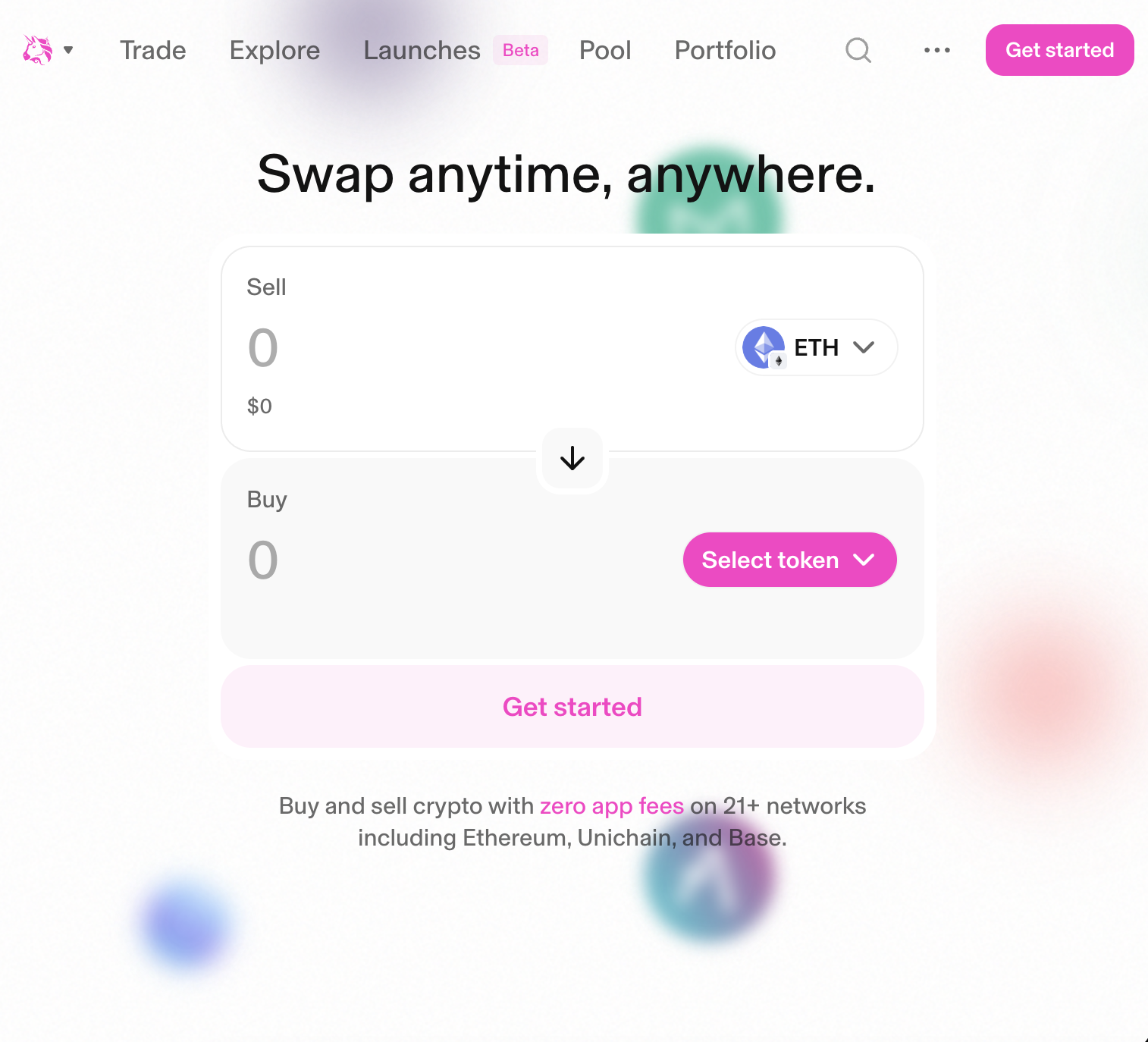
A typical DEX interface by the lovely Uniswap.
Serendale realm Marketplace zone with NPCs.
-
![Video game interface showing a token selection menu with options for common bases with pixel art characters in a forest background.]()
TOKEN SWAPS
Trade with Matoya, the merchant NPC
-
![Pixel art depiction of a farm scene with a garden, various plants, flowers, and vegetables, a small building, and characters including a farmer and a person tending the garden.]()
LIQUIDITY POOLS
Plant seeds, watch them grow.
-
![Pixel art depiction of a small, enclosed space with a yellow ground, a green turtle-like creature, several rocks, and scattered items including a pink feather, blue gem, and green leaves.]()
STAKING
Deposit tokens, earn tokens
-
![Video game menu screen showing options to travel to different locations and manage bridge-related assets, with pixel art background depicting a dockside scene.]()
CROSS-CHAIN BRIDGING
Partner bridges brought into the world


Solving the bridging problem
Cross-chain bridging was one of the biggest pain points in DeFi where users need to leave the platform, find a third-party bridge, and navigate back.
We made partnerships with bridge providers and brought them directly into the game world as the Docks zone. Users could bridge their assets without ever leaving the experience, with the same visual language and character interactions as the rest of the platform.
This dramatically reduced drop-off by 35% at a critical onboarding step.
Building the design system from zero
With a platform spanning web, mobile, wallet, and marketplace, consistency is non-negotiable. While the phenomenal nostalgic pixel art is done by talented pixel artists, the design system architecture consists of design tokens, UI components, interaction patterns, and a scalable front-end component library.
The system accommodates both the fantasy visual language of the game world and the precise functional requirements of financial interfaces: real-time data, transaction states, wallet connections, and error handling.
Impact & Business Outcomes
Decentralized finance in web3 is very complicated and as founding designer I made it easy to understand with a nostalgic gaming interface experience. The market differentiation and improvements to onboarding were primary drivers of growth:
300%
Month over month growth
After August launch, by 2021 Q4 platform scaled to 273,000+ active users by Q4 2021 with 300%+ MoM growth.
$1B+
Marketcap in 4 months
Cited alongside Axie Infinity as one of the two biggest blockchain games in the world.
35%
Drop-off Reduction
in bridge onboarding after redesigning the cross-chain experience.
DFK grew fast as top project on the home chain and launched the first blockchain subnet L1 on Avalanche, setting the tone for multichain experience. I'm grateful to the community, millions of users at peak and a billion in on-chain volume strong.
REFLECTIONS
Building DeFi Kingdoms taught me that making a complex system feel simple is not the same as hiding its complexity. We translated swaps, liquidity pools, staking, and cross-chain movement into a coherent fantasy world, but every playful interaction still had to communicate real financial states and consequences.
As the platform grew from its first realm into a multichain product with its own DFK Chain, the world metaphor and design system had to stretch and maintain clarity. Building that foundation from zero showed me that consistency is a product strategy.
The global markets changed dramatically after the early growth of 2021. That reinforced a lesson I carry forward: growth can validate a direction, but durable trust comes from clear states, predictable behavior, and honest guidance when the system around the product is volatile.
As a co-founder and founding designer, I learned to hold vision and operations together: defining the experience, aligning a cross-functional team, and building the system that let the product keep evolving.